


House and run in one footprint
One delivery gives overnight shelter, daytime run space, and laying access — no second structure to assemble.
The Sentinel is the chicken coop with run for buyers who want hardware-cloth predator focus for raccoon-prone yards. It is built around 8-10 hen owners prioritizing predator resistance over lowest price, with sizing and support details made clear before you add to cart.
Couldn't load pickup availability
Sentinel combines the sleeping house, nesting access, and covered daytime run in one ordered footprint. Choose it when you want a complete chicken coop with run for 8-10 hens, especially if hardware-cloth predator focus for raccoon-prone yards matters more than buying the lowest-cost kit.
Hardware-cloth predator focus for raccoon-prone yards. Planned around 8-10 hens and a 147 in length footprint.
| Best fit: | 8-10 hen owners prioritizing predator resistance over lowest price |
|---|---|
| Capacity: | 8-10 hens |
| Footprint: | 147 in length |
| Height / profile: | raised house |
| Primary material: | wood hardware cloth |
| Assembly: | 4-6 hours |
| Shipping: | Free US parcel shipping, flat-packed in multiple boxes from our US warehouse. |
| Warranty: | 12-month warranty on frame and hardware |
8-10 hens is the planning range for standard breeds. Bantams can usually stock higher, while large breeds should stay below the upper rating to prevent crowding and pecking.
Sentinel needs dry bedding, clear ventilation, and latch checks more than complicated maintenance. Keep nesting material fresh, scrape high-use roost areas, and add a predator apron where foxes or raccoons are common.
Plan for 4-6 hours before moving birds in. Free US parcel shipping, flat-packed in multiple boxes from our US warehouse. We recommend checking box contents before assembly and contacting support with photos if any part arrives damaged.
Yes, when stocked near the stated range and managed with dry bedding, airflow, and enough daytime movement. Large breeds should stay near the lower end.
The main difference is hardware-cloth predator focus for raccoon-prone yards, plus the practical yard footprint and daily access pattern.
Mark out the 147 in length footprint, clear a flat build area, and plan 4-6 hours for assembly before moving birds in.
Picking the right chicken coop with run comes down to four checks every keeper should make before ordering: flock size today and in 12 months, predator pressure in your area, assembly time you can realistically commit, and climate exposure.
Every backyard chicken coop benefits from a few targeted upgrades. The most popular pairings with Sentinel are:
The standard rule is 4 square feet of indoor coop space and 10 square feet of attached run per standard-breed hen. Bantams and Silkies can go slightly tighter. Free-range hens that forage outside the run all day need less run footage.
Yes — many keepers leave the run door open during the day so their laying hens free-range on the lawn, then return to the coop to lay eggs in the nesting box and roost at dusk. Pair with an automatic chicken coop door for hands-free dusk lockout.
Predator-resistant against most backyard threats: raccoons, hawks, weasels, and rats. For foxes, coyotes, and dogs that dig, add a 12-inch hardware-cloth apron extending outward from the run perimeter, buried 4 inches deep.
Plan for one nesting box per 3 laying hens. The Brood 8-compartment nesting box handles 16-32 hens if you scale your flock past what the built-in boxes can fit.
Every coop in this line has a pull-out or hinged-floor tray for pine shavings, straw, or hemp bedding. Most keepers do a deep clean monthly and a spot clean weekly. Drier bedding means less ammonia and healthier hens.
Yes — most coops with run in our line have footprints under 60 sq ft. If you need an even smaller option, see our small chicken coops collection for 2-6 hen builds.
Looking for a quick comparison? See our best chicken coops hero collection, or browse all chicken coops for sale in the catalog. Ships from our US warehouse with free shipping on most orders. US-based support if you have a question before or after assembly.
Capacity is rated for standard hens. Bantams stock 2x higher, heavy breeds (Brahma, Jersey Giant) stock 30% lower. See product images for full dimensions.
Wood-framed house with mesh-walled run. Asphalt or solid panel roof. Painted or stained finish depending on model. Re-seal wood annually for longer outdoor life.
Mesh-walled run keeps standard daytime threats out. For dig-prone areas (raccoons, foxes), add a perimeter ground apron of buried hardware cloth. Latches are basic by default; we recommend upgrading to spring-loaded locks if raccoons are common.
External nesting box lid lets you collect eggs without entering the run. Add fresh straw or pine shavings every 1-2 weeks. Most models include a tray for easy cleaning.
The mesh-walled run section gives daytime movement space while maintaining airflow. Hens need cross-ventilation more than they need warmth - design assumes year-round outdoor use with dry bedding in winter.
Typical build: 2-5 hours depending on size. Two people recommended for the larger models. Tools: cordless drill, wrench set, level. Pre-sort hardware before starting.
Ships flat-packed by parcel carrier from our US warehouse. Most orders deliver in 3-7 business days. Larger models may arrive in 2-3 boxes.
30-day return window on unassembled product. 1-year warranty on frame and hardware. Replacement parts available through our support team.


Integrated coops are about house volume, run square footage, and daily egg access — not just the headline hen count.

Rated capacities assume best-case stocking. Plan headroom: a 6-hen coop runs better with 4–5 active layers.
Overnight comfort comes from the enclosed house; daytime stress comes from run square footage. Check both numbers.
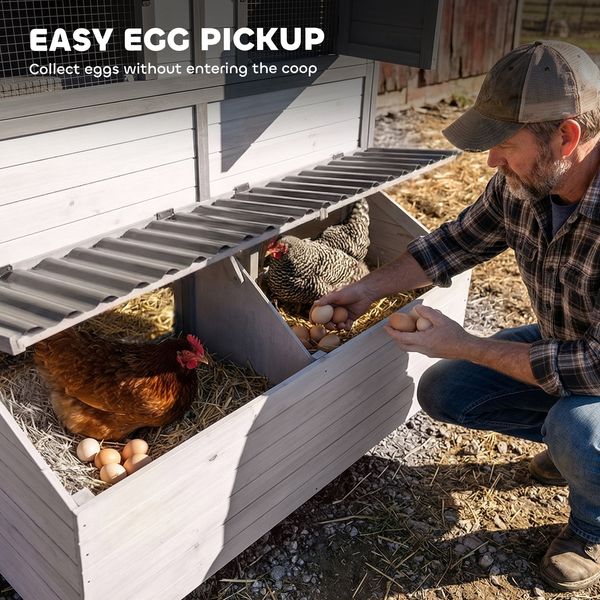
One box per 3–4 hens. External lid access lets you collect eggs without entering the run.
What buyers choose integrated house-and-run setups for.

One delivery gives overnight shelter, daytime run space, and laying access — no second structure to assemble.
Collect eggs through a rear lid without entering the run or disturbing the flock.
Mesh-walled runs block aerial threats. Add a buried hardware cloth apron for diggers.
A simple seasonal rhythm keeps bedding dry, wood sealed, and predators out.
Typical upkeep: 4–6 hours per year including one annual wood seal on exposed surfaces.
External nesting box access changes the math on daily chores. No more crouching through a run door, no more disturbing the flock, no more chasing a hen off her clutch. Three steps, ninety seconds, every day.
The nesting box opens from outside the run — no need to enter, no flock disturbance, no escape risk. The lid lifts on a hinge and stays propped open.
Lift each egg by the small end, check for cracks under daylight, and inspect bedding for moisture. Dry pine shavings stay; wet patches get scooped on the spot.
Drop the lid, click the latch, confirm it engaged. Refresh nesting bedding every 7-10 days; full house-section cleanout monthly with the pull-out tray.
Answer 4 quick questions. Get the exact coop and run footprint your flock needs.
Counting current hens plus any you plan to add this year.
Pick the zone that matches your winters and summers.
Pick the category most of your flock falls into.
How many hours your flock spends outside the run, on average.
Crunching square footage…
Free guide: flock-growth roadmap, seasonal maintenance checklist, and a printable build-specs sheet for your contractor.
Allow 2–3 sq ft of enclosed house per standard hen and 8–10 sq ft of run space. Add 30% headroom over the advertised capacity.
One nesting box per 3–4 hens. Most models include 1–2 boxes built in.
For above-ground threats, yes. For diggers, add a buried hardware cloth apron around the perimeter.
Yes if the run gives 8–10 sq ft per hen. Smaller runs work only with part-day free ranging.
Refresh nesting bedding every 1–2 weeks. Deep clean the house monthly. Rake the run every 2–3 weeks if needed.


